Unveiling the Ecosystem of Food Deserts: A Socio-Ecological Perspective
- jennshapka
- Nov 7, 2023
- 6 min read
Food is a universal necessity that transcends cultural, social, and geographic boundaries. It serves as a source of connection, a medium for celebration, and a basic human need. Despite its profound significance, many communities, whether located in bustling urban centers or remote rural areas, grapple with the widespread problem of limited access to affordable and nutritious food. These areas, often termed "food deserts," are troubled by elevated levels of food insecurity. These challenges are not inherent but rather appear due to a complex interplay of socio-ecological factors. In this blog post, we will use the Socio-ecological Model to unravel and explain how the distinct levels of influence interact in the creation and perpetuation of food deserts across all levels.
The Socio-ecological Model
The Socio-ecological Model serves as a theoretical framework within public health. Its purpose is to provide insight into the intricate interactions among individual, interpersonal, organizational, community, and public policy levels (fig 1.) that shape human behavior and impact health outcomes.

Figure 1: Socio-ecological Model. Image adapted from: Bronfenbrenner, U. (1977). Toward an experimental ecology of human development. American Psychologist, 32(7), 513–531. https://doi.org/10.1037/0003-066X.32.7.513
Individual level: This level includes demographic elements such as age, gender, socio-economic status, race, and disability status. Additionally, psychosocial factors, knowledge, and skills are part of this level. When speaking of the influence of this level on food deserts, we see how age can lead to reduced mobility, thereby presenting challenges in travelling to a grocery store to purchase healthier food options. Socio-economic status can limit one's ability to afford fresh and nutritious food items for themselves or their family. This situation can be exacerbated when individuals lack the financial resources to own a car or access alternative transportation means (Slater et al., 2017). Many of these lower-income areas are populated by racially discriminated communities, with indigenous populations often affected in Canada (Batal, M., et al. 2021). These factors collectively play a critical role in determining an individual's vulnerability to food deserts. For example, consider two residents in a food desert: one who conscientiously plans healthy meals and tries to find alternative transportation for better food options, and another who primarily relies on convenience stores for processed foods. Other factors, such as juggling two jobs or being a single parent, can force individuals and families to choose convenience to feed themselves or the family. These distinct choices have a profound impact on their susceptibility to the challenges presented by the food desert. While we recognize individuals are in control of the personal choices they make, they are further influenced by the interpersonal factors.
Interpersonal Level: Interpersonal relationships play a role in shaping food choices, whether within the confines of homes, schools, workplaces, or community recreation facilities. These settings provide valuable opportunities to enhance food and nutrition education and promote positive dietary practices. Teaching individuals about healthy eating habits and food preparation, utilizing the available community resources, and drawing upon peer support can collectively help address the numerous barriers faced within the community. Also, the sharing of family and culturally appropriate recipes develops the impact of these interpersonal connections. For instance, in a close-knit family the exchange of recipes and joint grocery trips fosters a culture of healthy eating. In contrast, for individuals whose social circles consist predominantly of friends who frequently patronize fast-food restaurants, dietary choices are influenced in a different direction, affecting their access to nutritious food options (Robinson, E., et al., 2013). Exposure to strong markets equals continued poor meal choices. Furthermore, exposure to strong marketing may perpetuate a pattern of continued poor meal choices.
Organizational Level: At the organizational level, the influence of food-related businesses and institutions is paramount. The location, pricing, and product offerings of grocery stores and supermarkets play a significant role in shaping the conditions within food deserts (Lu, W., & Qiu, F., 2015). This level is where we witness the impactful effects of strategies and policies adopted by food retailers, which can include point-of-purchase advertising, media, and food pricing, all of which collectively influence the quality and quantity of food access. This encompasses the overall atmosphere of the store and the affordability of healthy food offerings.
Furthermore, the geographical layout of each city plays a pivotal role in the development of food deserts. In densely populated cities where residents are concentrated, a higher number of grocery stores and markets thrive, fostering competition and positively impacting pricing and variety. This, in turn, helps mitigate the impact of food deserts on individuals. Conversely, in larger cities characterized by extensive urban sprawl, competition dwindles, exacerbating challenges related to transportation and access. The interplay between these organizational and environmental factors significantly influences the dynamics of food access and availability within communities.
Community Level: The community environment, which encompasses local neighborhoods and the built infrastructure, plays a fundamental role in shaping the prevalence of food deserts. Numerous factors come into play, including the proximity of grocery stores, the walkability of the area, the condition of transportation infrastructure, and the presence of farmers' markets, community gardens, and food assistance programs (Lebel, A. et al., 2016).
In addition to these structural elements, advocacy efforts and grassroots initiatives within the community contribute significantly to the availability of nutritious food. It's at this level where we witness a shift towards or away from culturally appropriate foods, largely driven by the purchasing power of the community and the advocacy of its residents. Collaborative partnerships among community organizations are a key strategy in reducing the barriers posed by food deserts, with the aim of increasing access to healthier food options. Importantly, these initiatives are highly adaptable and tailored to the specific needs of each individual community, emphasizing the integral role of the community environment in addressing food desert-related challenges (Lebel, A. et al., 2016).
Policy Level: Government policies, regulations, and programs have substantial influence over the presence and distribution of food deserts. These encompass a wide range of mechanisms, including zoning laws, subsidies, taxation, and incentives for food retailers, as well as various initiatives designed to address food insecurity and promote access to healthy food options.
For instance, the city of Montreal exhibits a unique urban landscape where low-income residents tend to cluster in the city center, while middle to high-income individuals gravitate towards peripheral areas. This distribution helps maintain reasonable competition and pricing in low-income neighborhoods, and the greater resources among residents act as a preventive measure against the emergence of food deserts (Apparicio, P., et al., 2007). In contrast, the city of Calgary's low-income neighborhoods is often situated next to or near more affluent areas, resulting in unequal levels of access to affordable fresh and healthy food and a higher incidence of food deserts. In response to this challenge, the City of Calgary initiated the "CalgaryEATS! Food Action Plan" as a collaborative effort between the city and the community. Progress has been made since 2017, with the growth of food assets like community gardens, farmers' markets, and food stands. This initiative also addressed food security during the COVID-19 pandemic and outlines future priorities, such as enhancing diversity and inclusion in food assets, strengthening food system resilience, and supporting the local food economy (Peters, K. 2022). These examples illustrate the pivotal role of government policies and community initiatives in mitigating the impact of food deserts and enhancing access to nutritious food options.
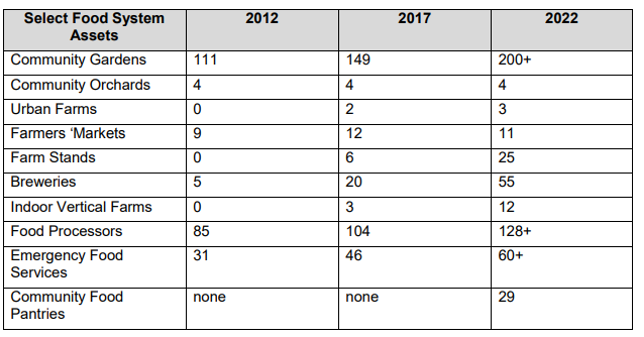
Figure 2: CalgaryEATS! 2017-2021 Key Programs, Initiatives and Status Update (Peters, K. 2022)
In summary, the issue of food deserts, characterized by limited access to affordable and nutritious food, is a complex challenge that affects communities across diverse geographic and socio-ecological landscapes. Our exploration, guided by the Socio-ecological Model, reveals the intricate interplay of various levels of influence. At the individual level, demographic, psychosocial, and socioeconomic factors impact vulnerability to food deserts. Interpersonal relationships within homes, schools, and communities further shape dietary choices, emphasizing the significance of peer support and culturally relevant food education. The organizational level, represented by food-related businesses and institutions, influences food access through location, pricing, and policies. Community-level elements, such as grocery store proximity and grassroots advocacy, also play pivotal roles. Finally, government policies and regulations hold considerable power in addressing food deserts, affecting zoning, subsidies, and taxation. A holistic, multilevel approach that considers these interconnected influences is crucial in tackling the challenge of food deserts and enhancing access to healthy and affordable food options for all communities.
References:
Apparicio, P., Cloutier, M., & Shearmur, R. (2007). The case of Montréal's missing food deserts: Evaluation of accessibility to food supermarkets. International Journal of Heath Geographies, 6(4). https://doi.org/10.1186/1476-072X-6-4
Batal, M., Chan, H. M., Fediuk, K., Ing, A., Berti, P. R., Mercille, G., Sadik, T., & Johnson-Down, L. (2021). First Nations households living on-reserve experience food insecurity: prevalence and predictors among ninety-two First Nations communities across Canada. Canadian journal of public health = Revue canadienne de sante publique, 112(Suppl 1), 52–63. https://doi.org/10.17269/s41997-021-00491-x
Bronfenbrenner, U. (1977). Toward an experimental ecology of human development. American Psychologist, 32(7), 513–531. https://doi.org/10.1037/0003-066X.32.7.513
Lebel, A., Noreau, D., Tremblay, L., Oberlé, C., Girard-Gadreau, M., Duguay, M., & Block, J. P. (2016). Identifying rural food deserts: Methodological considerations for food environment interventions. Canadian Journal of Public Health / Revue Canadienne de Santé Publique, 107(S1), eS21-eS26. https://doi.org/10.17269/CJPH.107.5353
Lu, W., & Qiu, F. (2015). Do food deserts exist in Calgary, Canada? The Canadian Geographer, 59(3), 267. https://doi.org/10.1111/cag.12176
Peters, K. (2022, April 27). CalgaryEATS! Food Action Plan 2022 Progress Update (Report No. CD2022-0460). City of Calgary. Retrieved 29 October 2023 from CalgaryEATS! Food Action Plan 2022 Progress Update (escribemeetings.com)
Robinson, E., Blissett, J., & Higgs, S. (2013). Social influences on eating: implications for nutritional interventions. Nutrition Research Reviews, 26, 166–176. https://doi.org/10.1017/S0954422413000127
Slater, J., Epp-Koop, S., Jakilazek, M., & Green, C. (2017). Food deserts in Winnipeg, Canada: a novel method for measuring a complex and contested construct. Health Promotion & Chronic Disease Prevention in Canada, 37(10), 350–356. https://doi.org/10.24095/hpcdp.37.10.05


Comments